Interior-Design Lessons From Some Of The World’s Most Beautiful Hotels
When it comes to creating character, comfort and a sense of place, beautifully designed hotels can offer plenty of interiors inspiration for the home, too. From genius lighting tips to the art of intuitive placement, here are the four lessons you need to know. By NATASHA BIRD
Long before ultra luxury resorts found their place on the travel wish lists of discerning vacationers, grand houses offered the ultimate escape. The finest European palazzi, hôtels particuliers and English country estates were society destinations designed to showcase the tastes of their owners and impress the guests they received with their beautifully curated rooms. Places like Chatsworth House and Blenheim Palace in the English countryside, with drawing rooms fit for close-knit conversation, libraries full of precious tomes and dining set-ups that felt both magnificent and personal.
Today, the world’s most beautiful hotels evoke a similar design language. When César Ritz, for example, opened the Ritz Paris in 1898, he brought his interpretation of the comfort and pace of the finest private houses into a hotel setting. In the UK, the original footprint for Claridge’s was a single, traditional London townhouse, which evolved into both an incredible hotel and an Art Deco landmark.
From a Renaissance palazzo in Florence to an art-filled villa on Lake Como and the penthouses of London, Rome, Brussels and New York – here, some of the world’s most inviting hotels share four expert design lessons to apply to your home.
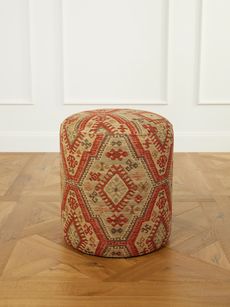 SIX THE RESIDENCEKashmar Pill velvet-jacquard pouf
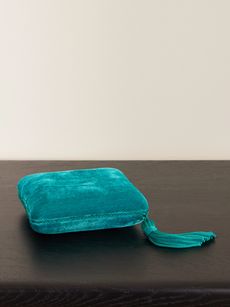 SOPHIE BILLE BRAHESmall velvet jewelry box
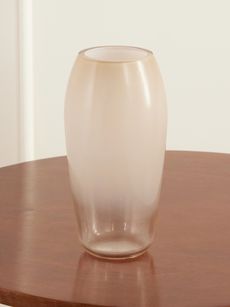 BRUNELLO CUCINELLIGlass vase
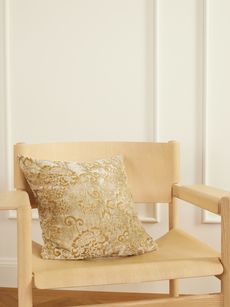 THE HOUSE OF LYRIASponge floral-jacquard damask cushion
Lesson 1: A Room Shouldn’t Be Too Uniform
The route to a characterful interior is not necessarily making everything agree. Avi Brosh, founder and CEO of hospitality group Palisociety, part of the Design Hotels collection, whose hotels are known for their distinctly residential approach, advocates for joy and story over anything thematic. “Buy things you love, not necessarily things that match,” he says. “A room bought all at once from one showroom never quite feels like anyone’s in particular.”
Brosh likes a vintage floor lamp beside a new sofa, worn leather against mohair or stained wood with bare brass. This approach is visible throughout Palisociety’s properties, such as its Hôtel Lili in Beverly Hills, where vintage, bespoke and contemporary pieces mingle together in a clearly unique way. The group describes its aesthetic as “unapologetically eclectic”, and Brosh has said its hotels’ interiors are made to continually iterate.
You can see the same principle applied at La Réserve Firenze, opening this October inside a restored 15th-century palazzo in Florence’s Oltrarno district. Its six apartments, designed by Gilles & Boissier, combine contemporary furniture with antiques, historic Florentine pieces, tapestries, sculptures and drawings. “Rather than trying to make everything belong to the same era, mixing old and new gives a room depth, character and a sense that it has evolved naturally over time,” says owner Grégory Marciano.
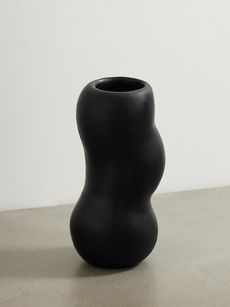 DINOSAUR DESIGNSValley medium resin vase
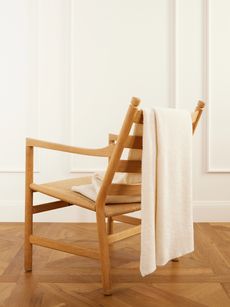 GABRIELA HEARSTHallam cashmere and silk-blend throw
 LOUISE ROEPirout 01 ceramic vase

Lesson 2: Light The People, Not The Room
Hotels understand something very particular about how to create atmosphere among different, siloed groups of guests: illumination in pockets. “Kill the overhead lights wherever you can manage it,” says Brosh. “Great hotel rooms are lit in layers; almost everything sits at or below eye level.” His edict is pretty simple: table lamps, sconces, warm bulbs, dimmers and reading lights positioned where somebody might actually read. “Light should pool, not flood.”
At Casabianca on Lake Como, Paolo and Antonella De Santis have created three suites within their contemporary-art destination, the lesson is also about ease. Their lighting is deliberately intuitive to guests’ activities, moving from bright task lighting to softer illumination, without confronting guests with a complex control panel. Casabianca itself houses the De Santis family’s collection of 20th- and 21st-century art, with each suite effectively allowing guests to live among it.
And remember the bathroom. Brosh credits his wife, Palisociety principal Kirsten Leigh Pratt, for teaching him that “flattering light in a bathroom is the single most generous thing you can offer guests”.
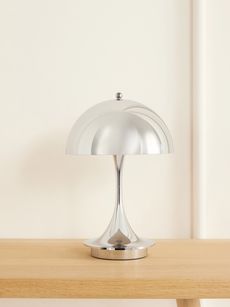 LOUIS POULSENPanthella 160 portable table lamp
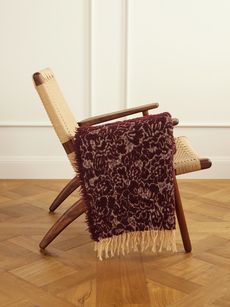 THE HOUSE OF LYRIAMalghe fringed floral-jacquard wool-blend throw
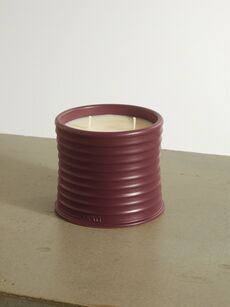 LOEWE PERFUMESBeetroot medium scented candle, 610g
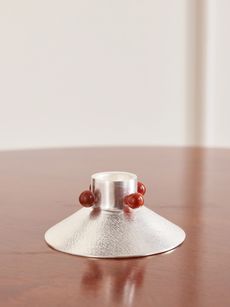 NATALIA CRIADO+ Vesper Voyage Axis silver-plated and stone candle holder
Lesson 3: Design Around How You Actually Live
According to our experts, the most useful hotel design often goes unnoticed. A light switch that is reachable from the bed. Somewhere obvious to put a glass of water. A chair positioned to bask in the glow of the morning sun. Relatively tiny decisions, perhaps, but collectively they make a beautiful room pleasurable to be in.
At Casabianca, furniture placement is all centered around natural daylight: armchairs are positioned to take advantage of the changing sun and frame views of Lake Como or the property’s century-old cedar tree.
The same thinking can transform larger rooms, too. Rather than marooning furniture around the edges, create smaller territories within one space. Rugs, lamps and groups of furniture can establish what might be a cozy reading corner or a sociable conversation area. Martin Brudnizki uses a related idea in the Surrey Suite at The Surrey, A Corinthia Hotel, on New York’s Upper East Side. Its expansive living and dining spaces retain intimacy thanks to layered textiles, warm woods, a glass-enclosed fireplace and a six-person dining table with its own butler’s pantry.
At La Réserve Firenze, Gilles & Boissier go further – placing four-poster beds in the center of some of the enormous bedrooms. “A large four-poster bed becomes almost a room within the room,” explains Marciano.
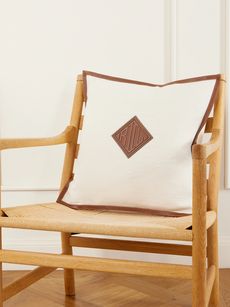 RALPH LAUREN HOMEMoore leather-trimmed linen cushion
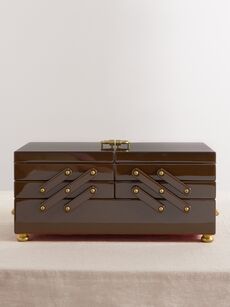 MARLA AARONThe Everything resin jewelry box
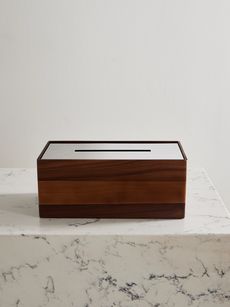 CHRISTOFLEUni walnut and stainless steel tissue box
Lesson 4: Give A Room A Story
Corinthia’s new Penthouses & Suites collection makes the idea of giving a room a story explicit, drawing upon the culture and history of each city. At Corinthia London, the two-story Musician’s Penthouse includes a Steinway Model O piano and cocktail cabinet. In Brussels, the Brontë Penthouse references Charlotte, Emily and Anne Brontë (who studied in the city in the 1840s) with deep-blue paneling, manuscript-inspired wallcoverings and a study containing leather-bound books – with a particular focus on works by contemporary female authors.
At Corinthia Rome, the Theodoli Heritage Suite occupies part of the former Bank of Italy building. The restoration retains original frescoes and an extraordinary historic ceiling, setting them against contemporary Italian art and furniture.
It is a lesson Casabianca understands, too. The De Santis owners have tastefully placed beautiful books about Lake Como, architecture, artists and designers beside beds and in sitting areas. “Our dream is that guests read the books,” they say. Much more valuable than styling or staging props, they see them as clues to the place and the people behind it.
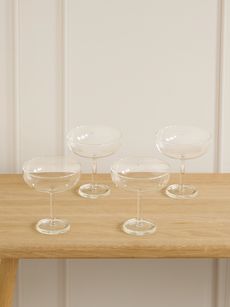 SOPHIE LOU JACOBSENRoma set of four crystal-embellished glass cocktail coupes
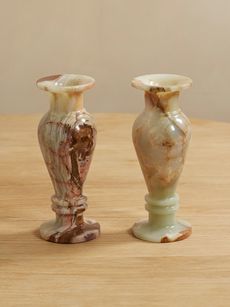 JIA JIA HOMESet of two onyx vases
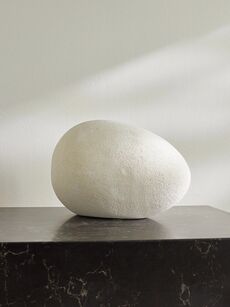 FOURTH STREETEgg limestone ornament
