How I Curate My Space: Inside Madelynn Hudson’s Calm, Mid-Century Retreat
In a 1960s wood-paneled home in upstate New York, interior designer Madelynn Hudson leans into the building’s warmth, peace and beautiful golden-hour light. By NATASHA BIRD
“I used to layer more. More objects, more statements, more moments. My design was a lot louder in the past,” says interior designer Madelynn Hudson, “Now, I think silence is powerful.”
Moving upstate will do that to you. At least when it comes to upstate New York. Escaping the frenetic, constant activity of the Big Apple, for the relative serenity of Hudson’s forests, rivers and sweeping views of the Catskill mountains, would have a calming effect on just about anyone.
For the founder of M. H. Interiors, it’s also where she got the chance to distil her design philosophy, within the wood-wrapped walls of her 1960s home. “I’m drawn to interiors built through material and tension rather than decoration,” she says. “Our house is floor-to-ceiling wood paneling, exposed beams, deep window castings. The energy is amazing. Like a warm embrace, clean and unpretentious.”
The whole building is unapologetically mid-century. In fact, when Hudson first walked in, it felt as if she’d been transported back in time: “I’m talking linoleum floors, orange carpet, complete with floral wallpapers and a teal bathroom,” she laughs, recalling that her now-husband bought the house while they were still in an early stage of courtship. “We had our first date in the backyard! I remember thinking, ‘Who would be crazy enough to buy this?’ Clearly, he was.” She takes a beat. “But even then, I felt the potential. It felt like a memory waiting to be made.”
Rather than strip the house back to pale, algorithm-friendly neutrality, Hudson leaned into its character. The renovation was carefully done: a few walls removed to open the main living spaces, hardwood floors laid throughout, and every surface washed in ‘Wimborne White’ by Farrow & Ball.
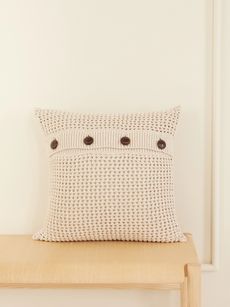 BRUNELLO CUCINELLIOpen-knit cotton-blend cushion
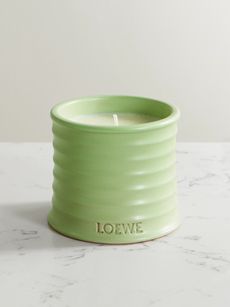 LOEWE PERFUMES+ Leo Wu cucumber small scented candle, 170g
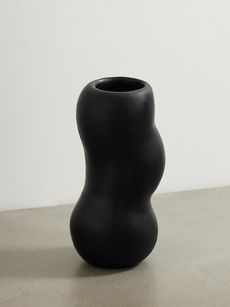 DINOSAUR DESIGNSValley medium resin vase
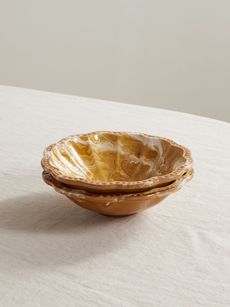 CABANASet of two small scalloped ceramic bowls
“Our house is floor-to-ceiling wood paneling, exposed beams, deep window castings. The energy is amazing. Like a warm embrace, clean and unpretentious”
“I wasn’t interested in fighting the wood or bleaching it out. I wanted to let the warmth become the foundation of the home.” The result is tonal and tactile. Long, low, curved sofas in a muted clay tone reduce the visual weight of the room. There is a definite sensuality to the palette. “It’s low and intimate, which invites closeness.”
The art, lamps and finishings provide a bit of tension against the pillowy, enveloping seating. Polished chrome and glass punctuate the space “like jewelry,” she says. In the late afternoon, “when the light turns golden, the Noguchi lanterns begin to glow. The entire room shifts. It’s cinematic.”
That low evening light is the real protagonist throughout the house. “It pours in through the large windows, framing the trees like moving artwork.” The living room, she says, is where it falls best. “That room holds everything: morning coffee, dog zoomies, toddler toys, long dinners and laughter-filled evenings with friends,” she explains, “Then the glow stretches across the wood walls in long golden bands, exaggerating the grain. We instinctively gather there at that hour, lamps on, music low.”
This home marks a particular chapter in Hudson’s life. With a young daughter and work that keeps her frequently in the city, she craves stillness. “It’s a place where we, as a family, slow down.” In Manhattan, days can stack up in sharp angles and deadlines. Here, the edges blur. “The house is forgiving – and designed for real living, not performance.”
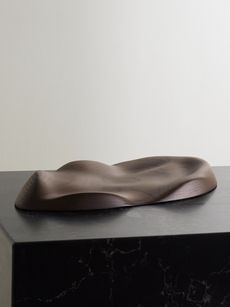 FOURTH STREETRipple large wood catchall
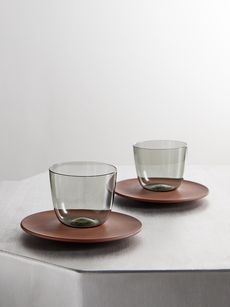 LOBMEYR+ MEISSEN set of two glass and stoneware espresso cups and saucers
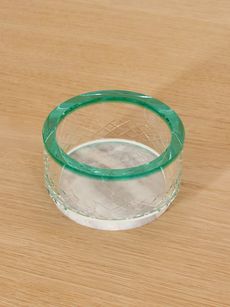 REFLECTIONS COPENHAGENGallant crystal and natural onyx nut bowl
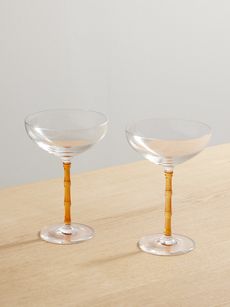 LA DOUBLEJBamboo set of two crystal champagne coupes
“I wasn’t interested in fighting the wood or bleaching it out. I wanted to let the warmth become the foundation of the home”
Hospitality “is everything,” she says of hosting friends in Hudson. “I design rooms for the in-between moments… the second glass of wine, the long conversation after dinner, the quiet cup of tea in the morning. I want people to feel more beautiful and at ease in a room.”
With such openness and a considered approach to filling space, objects, when chosen, must carry their weight. “I love the custom bolster I had made for the vintage daybed. Also, the vintage red travertine coffee table is super-special and took months to find,” Hudson explains. The most meaningful item is, however, “the dining table. I first bought it in LA for my apartment there and it has since traveled to various homes in New York – and now here. This table is where everything converges; work, friends, family, late-night ideas, early-morning emails. It holds the rhythm of our lives.”
The teal bathroom remains, for now, a defiant relic of the house’s origins. “It’s unapologetic and a little playful. I love honoring a house’s history rather than erasing it entirely.” They are considering one day renovating it, while keeping the original fixtures intact, but currently it lives on in all its glory.
On that note of restraint, Hudson muses: “I think maturity in design is learning what not to add.”
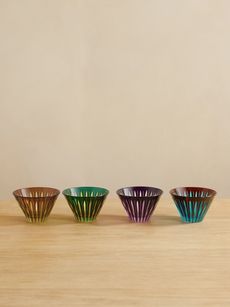 L'OBJETPrism set of four bowls
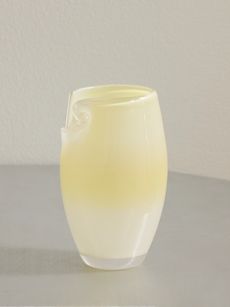 COMPLETEDWORKSMini recycled-glass vase
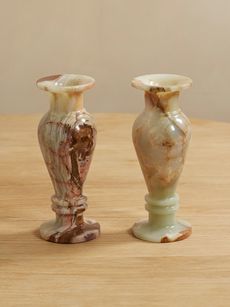 JIA JIA HOMESet of two onyx vases
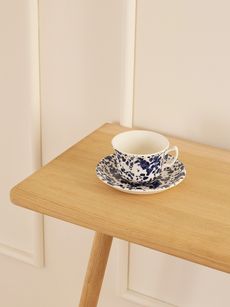 RALPH LAUREN HOME+ Burleigh painted earthenware teacup and saucer set
