10 Lesser-Known Islands To Visit Before Everyone Else Does
Spoken about in hushed tones by locals hoping to gatekeep, or only recently opened up to wider tourism, these are the under-the-radar islands around the world worth knowing now. By NATASHA BIRD
In the age of social media saturation, it’s hard to stumble upon anything truly ‘secret’ anymore. That said, there are still some corners of the globe that feel relatively under-circulated. Known only among the well-traveled or beloved by the region’s locals, there are beautiful islands aplenty that are perfectly prepared to welcome the jet set, but rarely appear on bigger bucket lists. So, if you love the feeling of discovering an unspoilt gem and the pleasure of arriving somewhere that not everyone has already posted, consider these for your next escape…
Tetiaroa, French Polynesia
Thirty miles north of Tahiti, Tetiaroa is the kind of place that sounds fictional until you see it from above: a ring of tiny coral islets scattered around a lagoon so vividly blue it feels almost photoshopped. Long before it became associated with Marlon Brando (who bought the island in 1966), it was a retreat for Tahitian royalty, used as a summer sanctuary by chiefs and kings. Today, bird colonies thrive here, sea turtles nest on its shores, and access remains deliberately limited, preserving a sense of privilege that money alone rarely buys.
Its sole hotel, The Brando, is one of luxury travel’s great modern benchmarks. Thirty-five villas sit discreetly along the sand, each with a private beach and plunge pool. Michelin-level dining, Polynesian cultural experiences, marine excursions and holistic spa treatments are all included, but the real achievement is behind the scenes: renewable energy systems and an ambitious carbon-neutral vision that make this paradise unusually future-facing.
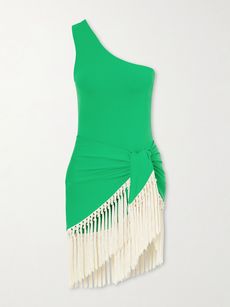 TALLER MARMOYacare swimsuit and fringed pareo set
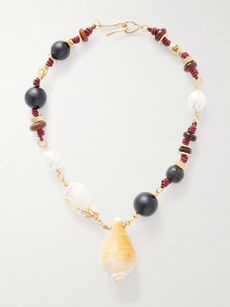 TOHUMSamsara gold-plated, onyx, leather and seashell beaded necklace
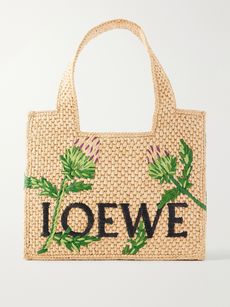 LOEWE+ Paula's Ibiza small embroidered raffia tote
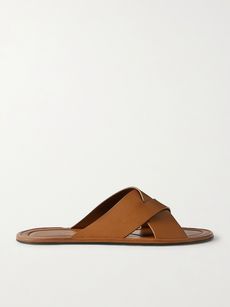 THE ROWMalik leather sandals£1,210.00View Product DetailsSelect a Size36 - out of stock3737.5 - out of stock3838.539 - low stock39.5 - out of stock40 - out of stock41 - out of stock42
Mnemba Island, Tanzania
Just off Zanzibar’s northeast coast lies Mnemba, a private island so intimate its circumference measures little more than a mile. Encircled by coral reef and lapped by sapphire water, staying there feels a little like you’ve just inherited an island of your own. The surrounding marine conservation area is one of the most pristine in the region – home to turtles, dolphins and exceptional reef life – while the island itself is shaded by casuarina pines and edged with white coral sand.
&Beyond Mnemba Island Lodge accommodates no more than 26 guests in 12 open-air beachfront bandas. Interiors are understated, allowing the island setting to be the main attraction. There are no televisions, no distractions and very little reason to look at your phone. Imagine days spent diving, snorkeling, sailing traditional dhows or joining coral-restoration efforts with local marine teams.
Benguerra Island, Mozambique
Well-known among safari insiders and honeymooners, but still far from mainstream, Benguerra is one of the Indian Ocean’s quiet triumphs. Part of Mozambique’s protected Bazaruto Archipelago National Park, it combines dune-backed beaches, freshwater lakes, indigenous forest and some of Africa’s rich marine biodiversity. Offshore, reefs teem with life, manta rays glide around with genteel effect and the world’s last viable dugong (sea cow) populations still survive here.
Kisawa Sanctuary has brought a new level of up-market sophistication to the island. Just eight expansive residences are spread across 300 hectares of beach, forest and dunes, ensuring privacy on an enormous scale. Interiors blend local craftsmanship with contemporary design, while guests also support marine research through the neighboring Bazaruto Centre for Scientific Studies, Africa’s first permanent ocean observatory. Few places manage to feel so luxurious and so meaningful.
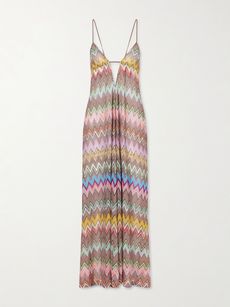 MISSONIStriped metallic crochet-knit coverup£910.00View Product DetailsSelect a Size3638 - low stock40 - low stock42 - out of stock44 - low stock46 - low stock48 - out of stock
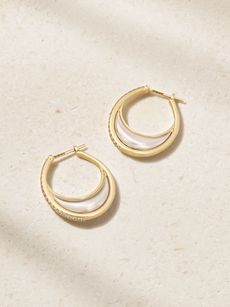 L'ATELIER NAWBARBloop 18-karat gold diamond hoop earrings
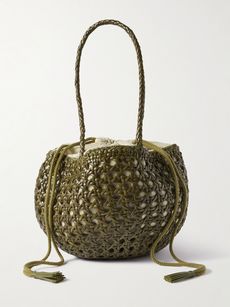 DRAGON DIFFUSIONJuventus woven leather bucket bag
 AEYDERaine leather thong sandals£310.00View Product DetailsSelect a Size3536 - low stock36.5 - low stock3737.53838.53939.54040.5 - low stock4141.5 - low stock42
Tinos, Greece
If Mykonos is the Cyclades in full volume, Tinos is its counterpoint island. Deeply revered within Greece as a major pilgrimage destination thanks to the Church of Panagia Evangelistria, it has long attracted domestic visitors while remaining surprisingly overlooked internationally. What awaits is a collection of marble villages, terraced hillsides, wind-sculpted landscapes and serious food culture, where old craft traditions still shape the everyday. Tinos is also increasingly known for mindful winemaking and a creative crowd seeking something less obvious than neighboring hotspots.
Odera Tinos is the island’s first major luxury hotel and takes an experience-led approach. Guests can begin with yoga in the hills of Loutra, explore the former Ursuline monastery, visit vineyards producing indigenous low-intervention wines, or head inland on jeep safaris through abandoned hamlets and remote fishing villages. Plus, private yachting excursions reveal coves inaccessible by road.
The Azores, Portugal
Often described as the Hawaii of Europe, the Azores remain remarkably absent from travel bucket lists. Then again, the Azores only fully opened up their airspace to international airlines in 2015. This Portuguese archipelago of nine volcanic islands rises from the mid-Atlantic, offering a feast of crater lakes, black lava fields, hydrangea-lined roads and dramatic cliffs. São Miguel alone has more than a dozen major lagoons and over 100 geothermal springs. The waters around the islands form one of the North Atlantic’s richest marine sanctuaries, with around 28 species of whales and dolphins recorded annually, including resident sperm whales.
Of the places to stay, Octant Furnas makes the most of the islands’ elemental assets. Set in the geothermal Furnas Valley, it channels mineral-rich spring water into indoor and outdoor pools, thermal circuits and restorative treatments rooted in volcanic wellness. There is also the local culinary ritual of cozido, a stew buried underground to cook naturally in geothermal heat. Elsewhere, volcanic wines grown in lava-rich soil add another compelling reason to hang around a bit longer.
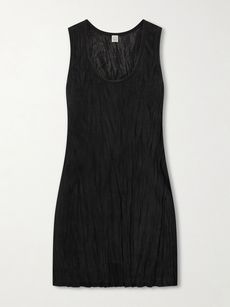 TOTEMECrinkled Viscose knit tank£162.00View Product DetailsSelect a Sizexx smallx small - out of stocksmallmedium - low stocklargex large - out of stock
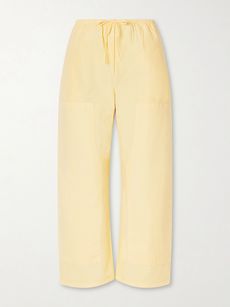 LESETKyoto cotton-poplin wide-leg pants£270.00View Product DetailsSelect a Sizex small - out of stocksmall - out of stockmedium - low stocklarge - low stockx large
 LE MONDE BERYLMary Jane knotted leather ballet flats£455.00View Product DetailsSelect a Size3636.53737.53838.5 - low stock39 - low stock39.54040.5 - low stock41 - low stock41.5 - out of stock42 - low stock
Sainte-Marie, Madagascar
Not to be confused with the fictional Caribbean-based Saint-Marie of BBC show Death in Paradise, this island can be found off Madagascar’s east coast. Sainte-Marie feels like the Indian Ocean before overdevelopment. Narrow, green and fringed by palms, the island was once associated with pirates, spice routes and seafarers and its famous pirate cemetery remains one of its more unusual attractions. Inland, vanilla, cloves and coffee grow, while mangroves, orchids and endemic palms create a rich tropical ecosystem. Coral reefs form calm natural pools offshore, and humpback whales pass nearby in season.
Voaara Madagascar is an intimate retreat, raved about by seasoned travelers. There are just seven bungalows and one private villa along a 1.5-kilometre beach, designed with driftwood, thatch and delicately luxurious indoor-outdoor spaces. Days can be spent diving, deep-sea fishing, mountain biking or doing very little at all.
Belle-Île-en-Mer, France
French travelers have loved Belle-Île for centuries, which is worth stating plainly. Yet outside of France, this island off Brittany remains comparatively under-recognized given its scale and beauty. Nine miles offshore in the Atlantic, it is made up of wild cliffs, sheltered coves, over 60 beaches and a microclimate blessed with unusually generous sunshine. The island’s shifting light famously captivated Claude Monet, who painted 39 works here in 1886, particularly around the dramatic Pointe des Poulains.
The next chapter will come via La Citadelle Vauban, opening in 2027 under the esteemed Emblems Collection. Set within the island’s formidable historic fortress above Le Palais, it promises heritage grandeur with contemporary style. Until then, Belle-Île remains exactly as it should: chic, windswept and less frequented than the Riviera.
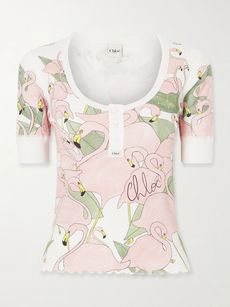 CHLOÉPrinted ribbed cotton-jersey T-shirt
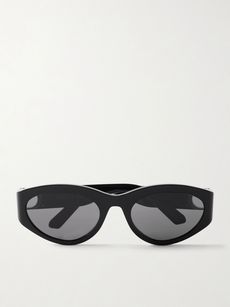 DIOR EYEWEAR30Montaigne B7I cat-eye acetate sunglasses
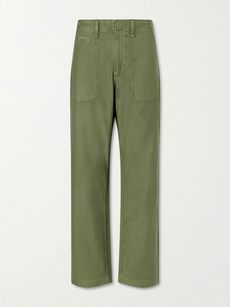 CITIZENS OF HUMANITYWinslow Utility cotton straight-leg pants£320.00View Product DetailsSelect a Size232425262728 - low stock2930 - out of stock31 - out of stock32 - out of stock
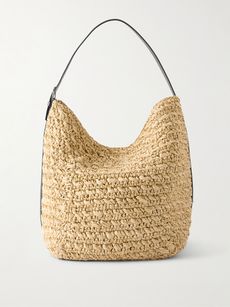 TOTEMELeather-trimmed raffia shoulder bag
Isle of Lewis, Scotland
Lewis is hardly unknown to Scots or devoted lovers of wild Britain, but internationally it is vastly unsung. The largest island of the Outer Hebrides offers a landscape of Atlantic beaches, moorland, peat bogs and sweeping skies, alongside a living Gaelic culture that gives the place genuine depth. The 5,000-year-old Calanais Standing Stones predate Stonehenge, while the Iron Age Dun Carloway Broch and Arnol Blackhouse Village chart centuries of island life. Then there are beaches like Reef, Uig Sands and Eoropie, where white sand and turquoise water look implausibly tropical (when the sun appears).
Scaliscro is a 10-bedroom, exclusive-use lodge spread across 10,000 acres of raw Hebridean landscape. Designed by local architects with interiors by Willie Nickerson, it combines serious art, a private chef, treatment rooms and tailored adventures ranging from scallop diving to horseback rides. It is Britain at its wildest, but with high-thread-count sheets.
Frangipani Island, Panama
Part of Panama’s Bocas del Toro archipelago, Frangipani Island is a private tropical hideaway reached by a short boat transfer from Bocas Town. Mangrove forests take up the shoreline, coral ecosystems flourish further out and the atmosphere is blissfully unplugged. It feels like a beautifully designed ecological experiment, not a conventional resort destination.
The only hotel on the island, Nayara Bocas del Toro, is iconic – and for good reason. There are overwater villas with plunge pools, soaring bamboo treehouses and the world’s first elevated white-sand beach built on stilts above the sea. Yes, really. Entirely off-grid, it runs on solar power, harvested rainwater and advanced conservation systems. New for 2026 is the Colibrí Treehouse Spa, where you can indulge in cacao rituals and open-air treatments in the canopy. It’s sustainability, but seductive.
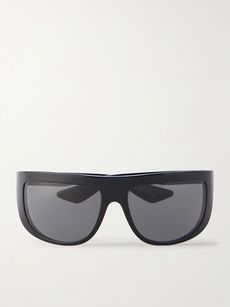 OLIVER PEOPLES+ Khaite 1974C D-frame acetate sunglasses
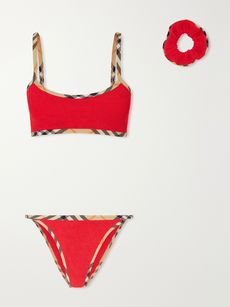 BURBERRY+ Hunza G Tyler checked Original Crinkle™ bikini
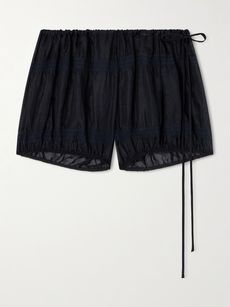 KIKI DE MONTPARNASSESmocked silk-blend voile shorts£128.00View Product DetailsSelect a Sizex smallsmall - out of stockmediumlarge - low stockx large - out of stock
 KHAITEBoden raffia sandals£1,010.00View Product DetailsSelect a Size3536 - out of stock36.5 - out of stock37 - low stock37.5 - out of stock3838.5 - out of stock3939.5 - out of stock4040.541 - low stock42 - out of stock
Hiiumaa, Estonia
Hiiumaa is Estonia’s second-largest island, comparable in size to Lanzarote in the Canary Islands, if you need a reference point. Set in the West Estonian archipelago, it is characterized by pine forests, empty beaches, juniper meadows and stillness. It’s a great place to go to switch off, which is a rare find, when traveling in Europe. Much of the island forms part of a Unesco Biosphere Reserve, protecting its fragile ecosystems and rural beauty. Hiiumaa is also known for maritime history: the 16th-century Kõpu Lighthouse is among the oldest continuously operating lighthouses in the world. For walkers, the narrow Sääretirp spit extends into the sea like a natural jetty.
Opening in summer 2026, Eha Retreat looks set to become the island’s defining stay. With just eight suites and three forest cabins, the wellness retreat is built around Hiiumaa’s unique five-season rhythm. Think Nordic minimalism and natural materials for the interiors, while programs combine thermal rituals, forest immersion, breathwork, movement and seasonal food. Thoughtfully low-impact, it goes big on restorative luxury.