Interior Design Lessons From Two New York Legends
Two aesthetically distinct design icons – Bunny Williams and Jonathan Adler – share five unique interior rules to apply to your home. By NATASHA BIRD
New York, the city where dreams are made and design aesthetics are as varied as the people living there. There are the grand pre-war apartments of Fifth Avenue, with their stately entrance halls and soaring ceilings; the sprawling artists’ lofts of 1970s SoHo; the prim and proper residences of Park Avenue and, of course, that alluring downtown boho fluency. It’s a city in which opposite ideas have always been allowed to flourish.
You would be hard-pressed to find two better New York designers to illustrate that multiplicity than Bunny Williams and Jonathan Adler.
Williams, who grew up in Virginia before studying and settling in New York, belongs to one of the great lineages of American decorating. After working at Manhattan antiques gallery Stair & Co., she spent 22 years at the legendary Parish-Hadley Associates, working on homes for some of America’s most prominent families before establishing her own firm in 1988. Her beautifully decadent but decidedly comfortable interiors have since made her an authority on a particular kind of New York elegance. And her latest book, Decoration, distills much of that knowledge into a 406-page masterclass on proportion, craftsmanship and the delicate business of combining old things with new ones.
Adler, on the other hand, represents a totally different sort of New York. The designer and potter began making ceramics as a child, moved to New York in 1990 and launched his business after Barneys bought his pots. By 1998, he had opened his first store in SoHo and today his distinctive, modernist American gleam has grown into a global lifestyle brand, offering everything from furniture and lighting to rugs, pillows, vases and other objets d’art.
Where Williams might embark on a beautifully proportioned Fifth Avenue apartment, among Adler’s references is the smell of oil paint in the SoHo galleries his father took him to as a child. One is a great custodian of American decorating tradition; the other has spent his career joyfully prodding at it. Bringing their expertise together, however, has birthed a surprisingly cohesive set of decorating rules to live by.
Lesson 1: Design For Feeling, Not Rubric
Adler is very specific about this. In 1986, as a college student from a small town, he visited The Odeon in Tribeca. “I was staying with a wealthy college pal on the Upper East Side,” he remembers. “We got into their chauffeur-driven Rolls-Royce, barreled downtown and I went through a portal to the world I hoped to inhabit.”
The atmosphere – a combination of downtown creatives, warm, moody lighting and a certain louche unpredictability – grabbed him immediately. “The restaurant is well designed but not over-designed,” he says. “The majesty of it is not rational. It’s a vibe.”
It’s a useful lesson. To avoid a technically put-together room feeling inert, Adler argues that the best interiors “need to feel a certain way. The route to the vibe isn’t rational and most definitely isn’t perfect.”
Williams came to a similar conclusion from a very different New York reference. Two particular apartments lodged themselves in her imagination: William Paley’s grand Fifth Avenue home, filled with exceptional furniture and art but still “incredibly comfortable and inviting,” and fashion designer Bill Blass’s much more sparse Sutton Place apartment, where a handful of remarkable pieces created a “serene, chic space.”
“They were both stimulating to me in completely different ways,” she says.
For both designers, the key is to stop trying to replicate a look wholesale and instead decide what you want a room to feel like, allowing a choice of objects to help get you there.
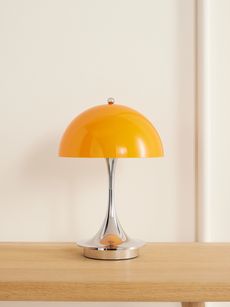 LOUIS POULSENPanthella 160 portable table lamp
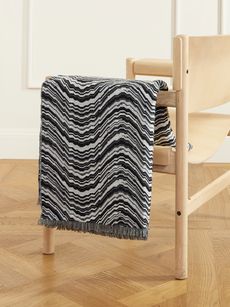 MISSONI HOMEFringed striped wool-blend throw
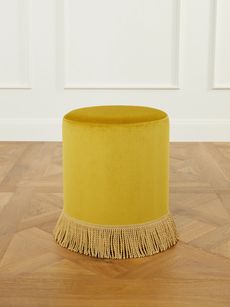 SIX THE RESIDENCEFringed velvet pouf
 REFLECTIONS COPENHAGENHamptons crystal bonbonniere
Lesson 2: Let the Architecture Do Some of the Heavy Lifting
Williams’ New York education seeded a lifetime’s reverence for proportion.
She refers to apartment buildings designed by Rosario Candela in the 1920s, where expansive rooms, high ceilings and entrance halls gave apartment living some of the pomp and scale of a private house. “What we learn from these apartments is how the volume of a space creates the magic,” she says. “What we do with it gives it personality.”
“One detail that I love to try is to have a large overscale painting on a wall, almost floor to ceiling,” she says. “This can add drama and make a room feel taller. Always try to carry the eye up.”
It is an easy trick to translate into smaller spaces, too: hanging curtains higher, resisting the urge to choose small furniture for a small room and taking artwork beyond predictable dimensions.
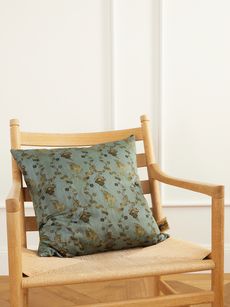 THE HOUSE OF LYRIAGodolia floral-print metallic woven cushion
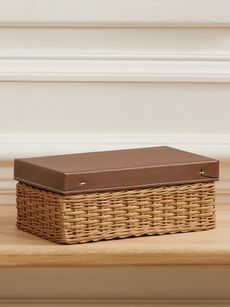 RALPH LAUREN HOMEBailey small wicker and embossed leather box
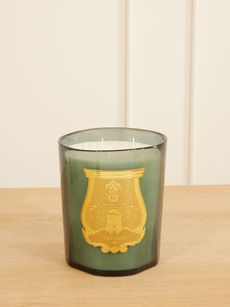 TRUDONFiguerie scented candle, 2.8kg
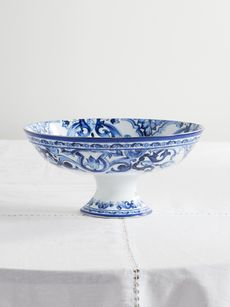 DOLCE&GABBANAPainted porcelain bowl
Lesson 3: Don’t Be Too Well Behaved
For Adler, the lesson of New York’s most notable apartments is nothing to do with deference to their stateliness and traditions. “The lesson is to be immoderate,” he says.
“When I was young and broke, my apartment looked amazing and I spent nada on it,” he says. “I found a sofa on the street. I painted the walls and found great light fixtures at the flea market. And, being a potter, I made a ton of groovy pots.”
The SoHo of the 1970s permeates Adler’s work. His Atelier Adler on West Broadway sits opposite Walter De Maria’s 1977 installation The Broken Kilometer, a work he describes as his “temple”; even the rows of fluorescent studio lights inside his store pay homage to it.
The transferable idea is to give yourself permission to decorate with lively conviction. A boldly colored lamp, your own artwork or something dramatically oversized might have considerably more presence than a room full of respectable purchases. Character is not born of beige expectedness.
 LA DOUBLEJBaby Bubble Murano glass candle stick
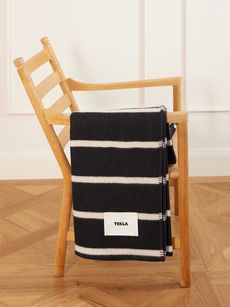 TEKLAStriped wool blanket
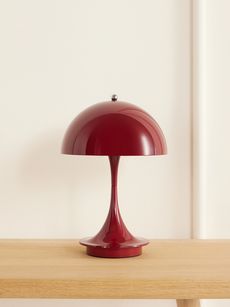 LOUIS POULSENPanthella 160 portable table lamp
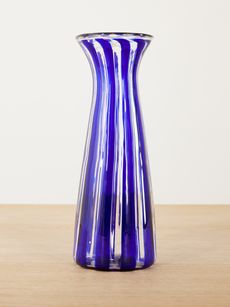 LAGUNA~BBerlingot Litro Murano glass vase
Lesson 4: Good Rooms Handle Contradictions
One of Williams’ favorite New York projects nicely demonstrates how you can revere historic architecture without feeling trapped in its confines.
Brought in to update a pre-war Park Avenue apartment for a young couple, she began by highlighting its traditional bones: new cornices, tall mahogany doors with bronze inlay and a dramatic, multicolored parquet floor.
Then, after the owners acquired the apartment above, Williams connected the two with a circular glass staircase inserted into the corner of the living room and designed the new level like an open contemporary loft. “The juxtaposition of the two spaces made for a really unique apartment,” she says.
It is an argument against decorating too subserviently to one period. A beautiful antique need not require an antique neighbor, just as a contemporary structure needn’t be populated solely by contemporary furniture. As Williams argues in Decoration, the eye sees beyond surface beauty to “proportion, authenticity, patina and potential.”
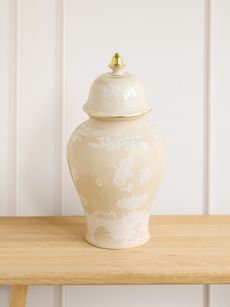 GINORI 1735Oriente Italiano porcelain potiche vase
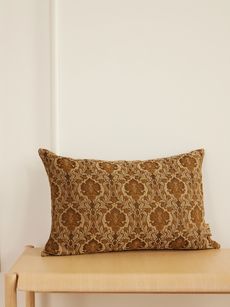 THE HOUSE OF LYRIAAdina jacquard cushion
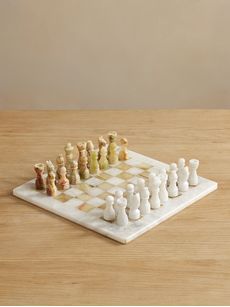 JIA JIA HOMEOnyx chess set
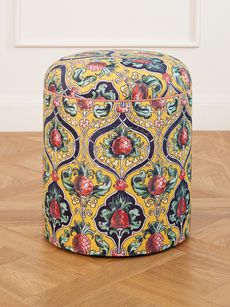 LA DOUBLEJBabà printed canvas pouf
Lesson 5: Spend Where It Changes the Room
“Chandeliers and rugs,” Adler fires back quickly when asked where to go big on spend. Then he reconsiders. “Oh, also paint or wall treatments. And sofas and chairs. And accessories. And…”
He jokes, though there’s a great point to take in. Far from subscribing to a rigid hierarchy of investment pieces, his point is about leaning fully into the environment you’re wanting to create. Lighting so deeply affects atmosphere; rugs establish scale and anchor furniture; wall treatments can change the whole feeling of an unremarkable shell.
Williams’ advice is equally useful, albeit from another direction: invest attention in the craftsmanship that will make a space function beautifully. New York, in particular, “has an abundance of creative talent” from furniture designers to custom lighting artists, she posits. But regardless of where you are in the world, she urges you to “work with designers with a dedication to quality.” In other words, spend on pieces that are exquisitely made, properly executed and that will help to make the space fun, comfortable, easy and enjoyable to be in.
Their perspectives might be poles apart stylistically but, in the course of building these lessons, it’s clear they both agree on some core principles. Chief among them? Commit, wholeheartedly, to your own point of view.
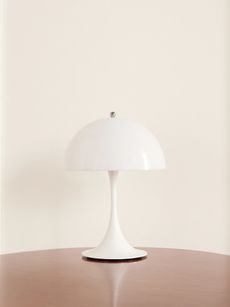 LOUIS POULSENPanthella 250 portable table lamp
 L'OBJETEvoca set of two gold-plated candlesticks
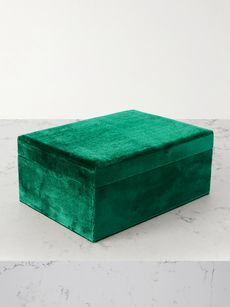 SOPHIE BILLE BRAHETrésor Grande velvet jewelry box
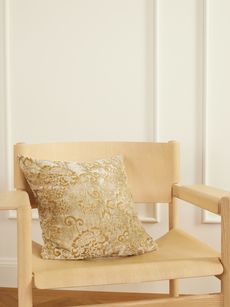 THE HOUSE OF LYRIASponge floral-jacquard damask cushion
