7 Expert-Approved Laser Facials You Need To Know About
From subtle brightening to deep rejuvenation, the right laser can transform skin in a way few other treatments can. But with so many options available, knowing what to choose – and why – is everything. Here, DEBBIE THOMAS decodes the best laser and light treatments that truly deliver. By MALENA HARBERS
If lasers have slipped off your radar in favor of alternative trend-led treatments, it may be time to reconsider. Few technologies are as established (or as capable) of genuinely transforming skin. It’s why names like Sofia Richie Grainge, Jennifer Aniston, Kate Hudson and Brooke Shields continue to rely on them for maintaining good skin quality.
“I can say with confidence that the best outcomes come from matching the laser technology to the biology of the skin in front of you, not from clients self-prescribing whatever is trending on social media – or inexperienced practitioners not understanding the nuances of the skin that have a big impact on the treatment response,” explains advanced skin therapist Debbie Thomas, founder of D.Thomas Clinic in London, whose expertise spans 20 years, with more than 40,000 laser treatments performed. She adds that “clients also tend to think the newest device must be the best one, when in reality, tried and tested is often best”. While Thomas stresses that a proper skin assessment is always where to start, she breaks down the laser technologies that actually deliver below – and shares how to match them to your skin concerns for results that go well beyond the surface.
For a visible glow-up: Clear + Brilliant
Consider this the entry point of lasers. Clear + Brilliant uses non-ablative fractional technology (which creates controlled columns of heat in the skin without physically removing any skin cells) to deliver a subtle boost in radiance, a smoother texture and that sought-after polished finish – all with minimal downtime. Favored by Jennifer Aniston as a skin refresh, it is best approached as a maintenance treatment rather than corrective. “It is a great way to try a fractional treatment without feeling like you are signing up for scary down time,” affirms Thomas. “The appeal is that it’s accessible, offers relatively low drama (compared to ablative fractional lasers, which physically remove microscopic columns of skin and are truly resurfacing) and is a great early-maintenance option.” She emphasizes that while entry-level fractional lasers like Clear + Brilliant are good for fresher-looking skin, very early correction and some preventative benefits, “they are not a substitute for stronger corrective treatments when your skin concern is truly established.”
For improved tone and texture: Moxi or LaseMD Ultra
If you want more than a surface refresh, step up to Moxi or LaseMD Ultra. Both sit within the non-ablative fractional category, working beneath the surface to stimulate repair rather than simply boosting glow. Expect a brighter skin tone, even smoother texture and gradual, buildable results (a course of treatments is usually needed). “If the goal is genuinely better skin quality rather than just a temporary glow, fractional resurfacing devices are where the real change tends to happen,” says Thomas, noting that thulium-based platforms like LaseMD Ultra and Moxi are especially effective when uneven tone, roughness and early photoaging overlap.
For deeper lines, pigment and lifting: ResurFx or Fotona 4D
For more intense correction, stronger technologies are key. “If someone wants to move visible pigment, improve deeper lines or get noticeable lifting, that is where I start looking at whether options like ResurFx (a stronger non-ablative fractional fiber laser than Moxi or LaseMD Ultra) or Fotona’s 4D treatments (which combine two different laser wavelengths, Er:YAG and Nd:YAG) would be more suitable.” These sit closer to true resurfacing territory, delivering more visible texture and tone changes alongside collagen remodeling, but they also require a more considered approach.
The all-rounder: IPL and BBL
Often mistaken for lasers, IPL (Intense Pulsed Light) and BBL (BroadBand Light) use a spectrum of light to target pigment and redness simultaneously. “A true laser emits one specific wavelength of light; IPL emits a broad spectrum of non-coherent light,” says Thomas. That makes them ideal for sun damage, redness and an uneven tone, though less precise than single-wavelength lasers when targeting one specific concern at depth. “In the right patient, they’re highly effective, particularly for mild to moderate, more superficial concerns.”
For redness and rosacea: Nd:YAG and pulsed dye lasers
Crucially, redness isn’t one condition. Thomas highlights that treatment should be led by whether it’s diffuse, inflammatory, superficial or deep – and here’s where laser depth plays a big role. “Pulsed dye laser has the strongest reputation for classic superficial vascular redness and is often described as the benchmark for rosacea-related erythema [redness]. That said, Nd:YAG works at 1064 nanometers, which means it penetrates more deeply than shorter vascular wavelengths, which matters because not all redness is sitting right on the surface. In rosacea and vascular redness, you are often dealing with a mixture of superficial flushing, background erythema and visible vessels at different depths. A good Nd:YAG can coagulate vascular targets deeper in the skin and reduce persistent redness. This is one reason why I rate the Fotona SP Dynamis so highly: it is not just an Nd:YAG, it is a very strong, versatile platform with powerful vascular capability and the added advantage of longer pulsed strengthening and repairing settings. This means I don’t only zap the existing redness but it helps me target and stop the cascade of inflammation that allows skin to flush back up as easily in the future.”
For pigmentation: A multi-targeted approach
“Just as with treating redness, the first and most important job is to identify what kind of pigmentation you have, since sun damage, post-inflammatory marks and melasma all behave differently,” says Thomas. “For straightforward sun damage and diffuse patchy pigment, IPL can still do a very good job. If the pigmentation is tied to inflammation and redness, vascular and yellow-light strategies such as AdvaTx are what I would use, paired with peels and microneedling for best results. For more refined pigmentation correction, especially when texture is also a concern, combining technologies, such as LaseMD Ultra with IPL, often delivers the best results.”
For all concerns: Consider laser cocktailing
Increasingly, the best results come from layering technologies, rather than relying on one device. “Very few clients walk in with one isolated skin problem. That is why a layered plan is often better than asking one device to do five jobs badly,” says Thomas. In practice, that might mean pairing lasers and light technologies to target different depths and concerns in a single plan – treating redness, pigment and texture simultaneously, but with precision. “Combination planning is not about doing more for the sake of it – it’s about treating the right target with the right wavelength, all in one session.”
NEW-SEASON ESSENTIALS
4 items
 TOTEMEBar 85 snake-effect leather mules$785.00View Product DetailsSelect a Size36 - out of stock3738 - out of stock3940 - out of stock41 - out of stock42
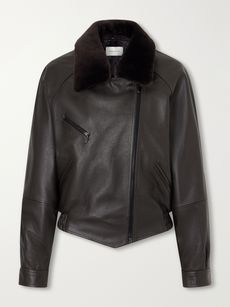 MAGDA BUTRYMCropped shearling-trimmed leather biker jacket
 BERNADETTEOscar bow-detailed gathered taffeta midi skirt$940.00View Product DetailsSelect a Size32 - out of stock34 - out of stock36 - out of stock38 - out of stock40 - low stock42 - low stock4446 - out of stock
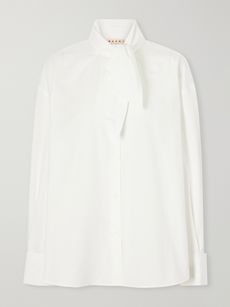 MARNIScarf-detailed cotton-poplin shirt
RELATED READING
The people featured in this story are not associated with NET-A-PORTER and do not endorse it or the products shown