Collecting For Now: The New Way To Build An Art-Filled Home
A new generation of collectors is changing the art world’s whole dynamic. Quite distinct from ‘trophy’ or even decorative art acquisitions, they’re developing a more interconnected relationship with artists and their work, which in turn affects how, where and why we hang it in our homes. By NATASHA BIRD
“I need to be challenged on an emotional level. When I’m looking at a work of art, I need to feel something,” says Harry Weller, creative director of Tracey Emin Studio and the artist’s longtime confidant.
After nearly two decades working in the trenches of one of the most emotionally exposed artistic practices in the world, Weller has little patience for art that is dull, purely decorative, or – worse – insincere. “It’s not about matching a sofa, armchair or carpet,” he says. “I want to walk into a room and have something be stirred within me.”
With such an involved hand in Emin’s creative process, Weller might seem like an outlier in his appreciation. Traditional collecting, particularly at the highest end, has often been driven by two parallel ambitions: investment, where the work presents value that accrues over time, and status, where the work functions as a ‘trophy’ or social signal. Both still exist, but neither feels especially contemporary. What Weller articulates is actually aligned with a broader shift in the market, towards greater interiority in how and why we acquire art. As he puts it, “Collecting should be an extension of your psyche.”
“That idea of ‘art as an investment’ feels increasingly outdated,” says Madeline Lissner, executive vice president for the Global Fine Art Division at auction house Sotheby’s. “People buy art because it resonates with them.”
That doesn’t mean the stakes are any lower. If anything, they are higher. “Collectors today talk about stewardship, legacy and the stories behind the works they live with,” Lissner continues. An artwork’s value, beyond its price, is now tied to its provenance, intellectual alignment and even a sense of responsibility to the work itself and the life it will have beyond us.
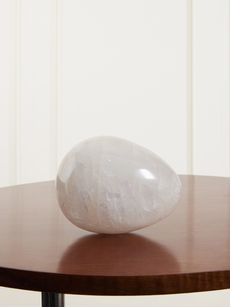 FOURTH STREETEgg quartz paperweight
 BRUNELLO CUCINELLIWood Board Game
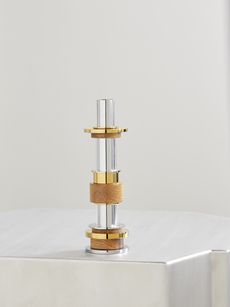 CHRISTOFLEMyriade large stainless steel, gold-tone, oak and glass candle holder
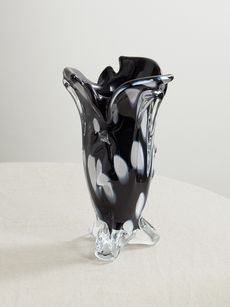 LOUISE ROEDrape glass vase
“People are increasingly investing in an ethos,” says Freeny Yianni, founder of Close Gallery. She points to their exhibition with artist Onya McCausland. “The Welsh water board has cleaned the riverbeds after the coal industry polluted them – and those materials have been made into pigment, introduced back into the community, and that’s what McCausland uses,” Yianni says, “It means so much more for a collector to understand that; to then have that on their walls.”
The entire shape of the market reflects a shift. Art collection was once a rarified practice, but it is steadily opening up. Sotheby’s bidders now come from over 100 countries, according to Lissner, with under-40s making up a growing share of that. David Knowles, founder of luxury art consultancy Artelier, sees this democratization first-hand. “Art collecting wasn’t always accessible to the everyday person,” he says. “But now, thanks to the internet, you can build your own knowledge… in a way, you can have your own fun.”
This has brought an age-old question – of whether you can separate the art from the artist – back to the fore. Where there always used to be middlemen in the process of art buying, now there doesn’t have to be. You can research artists on Instagram; directly message them if you’ve the chutzpah. “Even our high-net-worth clients want to invest in the artist behind the work,” says Knowles. “By collecting this art, they’re essentially saying, ‘I invest in your idea and your contribution to society; let’s visualize it and make it happen.’”
“Increasingly, what I am finding is that I am developing quite deep relationships with my collectors now”Stuart Semple
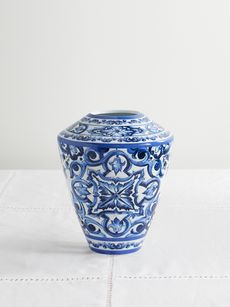 DOLCE&GABBANALarge Amphora painted porcelain vase
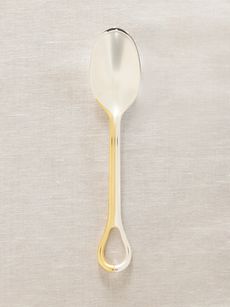 CHRISTOFLE+ Charlotte Chesnais stainless steel spoon
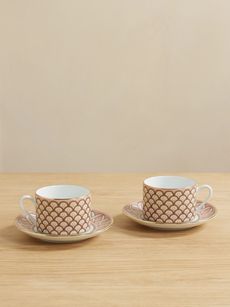 LA DOUBLEJImpero set of two gold-plated porcelain teacups and saucers
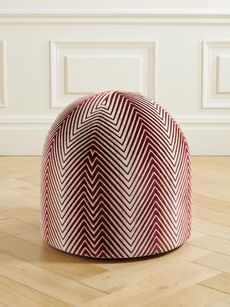 MISSONI HOMEZiggy striped velvet pouf
The idea of art as an active exchange between artist and collector is probably the most profound shift of all. “I feel incredibly lucky whenever anybody decides to live with a piece of my work,” says artist Stuart Semple. “I’m as interested in where it’s going to be housed and who is going to be looking after it as they are.”
For Semple, the collector is not an abstract concept. “Increasingly, what I am finding is that I am developing quite deep relationships with my collectors now. I feel very connected to them.” In some cases, that connection is quite literal. “It’s not even out of the question for me to go and revisit a painting when it’s already in someone’s collection and add to it or change it.”
Intimacy like this raises its own questions. What, exactly, are you bringing into your space when you hang a work on your wall? The process, the biography, the emotional labor that went into it… how much of that do you really have to take into account?
Weller is unequivocal about the sanctity of the studio: “It’s a magical space. Portals are opened. And something special takes place,” but even once the work leaves, its meaning doesn’t have to be fixed, he says. In the case of one of Emin’s most seminal works, My Bed (1998), “You are not supposed to think about Tracey’s desire, lust, love or pain,” Weller insists. “You’re supposed to think of your own.”
Which is why, even as provenance and process gain importance in the world of art collecting, they do not have to dictate interpretation, or the choice of where to display the work at home.
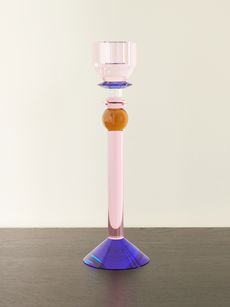 REFLECTIONS COPENHAGENRosalin glass candle holder
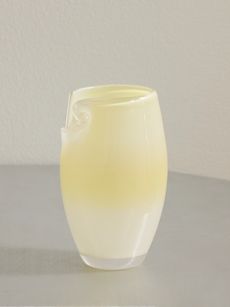 COMPLETEDWORKSMini recycled-glass vase
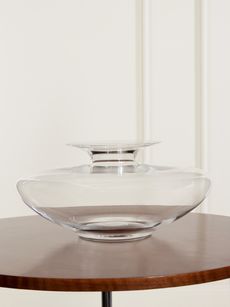 LOBMEYRCrystal glass vase
“You can buy things you love and you can grow your collection, and you don’t have to worry about how that impacts the scheme you then created”Christian Bense
For interior designer Christian Bense, the answer for how to approach art in private spaces is in considered freedom. “There’s still this phrase, ‘start with art,’” he says. “I’ve always felt that that takes away from this opportunity where art is an organic curation.” Instead of building a room around a single piece, he advocates for more fluidity: “You can buy things you love and you can grow your collection, and you don’t have to worry about how that impacts the scheme you then created.”
He’s not asking you to completely abandon structure. “It doesn’t just mean buy and hang whatever you want, that’s not a helpful idea.”
Bense suggests a few helpful edicts for thinking about how art that you love fits into interior design. “Focus predominantly on proportion and scale,” he says – in the first instance – and what’s going to make a room feel involving, expansive. Beyond that, he talks of various purposes art can serve. In one apartment, a lack of external views prompted Bense to install a hyper-realistic photograph of a Capri beach: “To give you that picture window.” Elsewhere, he counterbalanced an off-center fireplace with an asymmetrical arrangement of works, distracting the eye from architectural foibles.
Often, he goes on, we’re now using art to be disruptive – even in the home. Bense recalls a study, in a Georgian townhouse. The room’s design was upscale and sophisticated, if perhaps a little austere for that particular client. Together they introduced a giant painting of a rooster sourced from a Bali street vendor. “In many ways, it was a completely hideous piece of art,” Bense says, “but it took the edge off. It created a moment for people to feel, ‘oh this is a fun room.’ It’s whimsical.”
Which brings us back to where we started: with a feeling. Beyond investment, showmanship, or a home’s design scheme, the way we’re collecting art now is so much more about us as people and how we want to be moved.
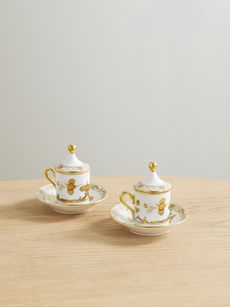 GINORI 1735Oriente Italiano set of two gold-plated porcelain coffee cups, covers and saucers
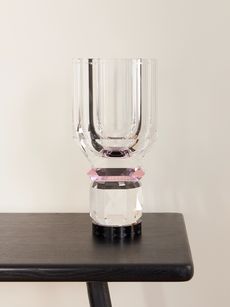 REFLECTIONS COPENHAGENUtah crystal vase
 MISSONI HOMEMontgomery fringed striped recycled wool-blend throw
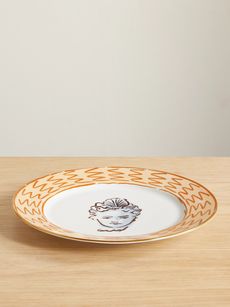 GINORI 1735+ Luke Edward Hall Il Viaggio di Nettuno gold-plated porcelain dinner plate
RELATED READING
The people featured in this story are not associated with NET-A-PORTER and do not endorse it or the products shown