The New Heirlooms: Objects Designed to Become Classics
The ultimate investment pieces for your home are beautifully crafted objects that improve with age, live easily alongside future collections and might one day be passed on to someone you love. By NATASHA BIRD
A Georgian silver salver burnished by generations of polishing; a set of Baccarat coupes brought out for decades of celebrations; a Cartier clock that has traveled from drawing room to drawing room or perhaps a slightly eccentric serving dish whose provenance is anybody’s guess but whose place at the Christmas lunch table is non-negotiable. The best heirlooms, of course, are ones that are both valuable literally and in the life they accumulated before they ever found their way into your space.
While this kind of history can’t be manufactured overnight, there has been a shift in the way we consider the objects we bring into our homes. Craftsmanship and quality are now listed among the strongest incentives for investing in homeware, while emotional connection has become much more paramount for desirability. Just look at the objects taking center stage on tables in the best-dressed homes. Three key designers exemplify this interiors evolution. Natalia Criado brings a contemporary, almost surrealist sensibility to traditional craftsmanship, turning silver plate, stone and crystal into sculptural objects that are both distinctly beautiful and timeless. At Christofle, nearly two centuries of silversmithing make the case for both lavish celebration and permanence, with pieces that already have a legacy of transcending generations. Ralph Lauren Home, meanwhile, approaches interiors much like a great wardrobe of clothes: through exceptional materials, with markers of quality like finely worked leather and hand-finished hardware. Here, we spotlight the designers…
Natalia Criado
“For me, an heirloom is an object that acquires meaning through use,” says designer Natalia Criado. “It is not necessarily something precious because of its monetary value, but because it becomes connected to rituals, memories and people.”
Criado’s work is a great case for the modern heirloom because it occupies a space somewhere between functional design and jewelry. Trained in industrial design in Milan, she draws on the metalworking traditions of both her Italian and Colombian heritage, creating silver-plated objects punctuated by stone, unexpected silhouettes and pointedly human details. A pair of silver-plated ice tongs finished with quartz; the Thysia bowl, created with Vesper Voyage, which sets red jasper against a gleaming silver plate. Her Redonda cake stand turns the faintly old-fashioned ritual of serving cake into something elegantly sculptural.
“I do not see irregularity as an imperfection,” Criado says. “It is evidence that an object has passed through someone’s hands.” Many of her pieces employ techniques associated with jewelry-making, including individual hammering, polishing and assembly. “In a world where objects can be reproduced with absolute precision, these small differences give an object character and humanity.”
It is an idea that the fashion industry understands all too well. The best leather becomes softer and lived-in, denim fades to the shapes of its owner’s body and a great watch acquires tiny scratches as evidence of being worn to fun places. Criado applies the same thinking to the home. “I imagine the surface changing over time, silver developing a patina, small marks appearing through use… because these traces become part of the history of the piece.” Her hand-shaped teaspoons, she says, have “a certain preciousness to them, almost like small pieces of jewelry for the table.”
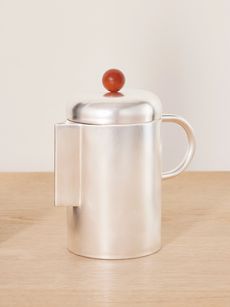 NATALIA CRIADOSimple silver-plated and stone coffee pot
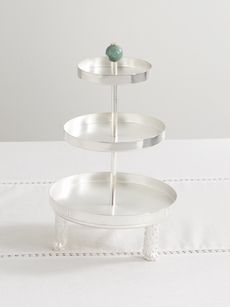 NATALIA CRIADOSilver-plated and jasper cake stand
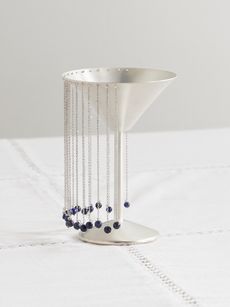 NATALIA CRIADO+ Taller Marmo Celebration fringed silver-plated and lapis lazuli margarita glass
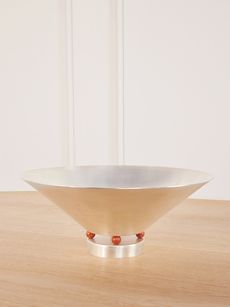 NATALIA CRIADO+ Vesper Voyage Tysia silver-plated and red jasper bowl
“In a world where objects can be reproduced with absolute precision, these small differences give an object character and humanity”
Christofle
Christofle began producing silver-plated objects in the 19th century, after Charles Christofle acquired French patents for electroplating in 1842 and went on to supply Napoleon III and other royal courts. Its Malmaison collection, with its palmettes, water leaves and rigorous Empire symmetry, traces its decorative vocabulary back to Château de Malmaison, Napoleon Bonaparte and Joséphine’s celebrated residence. Christofle first reinterpreted the style as Malmaison Empire in 1909. More than a century later, many of those motifs are still in production.
That makes a Malmaison silver-plated caviar serving set feel like the latest chapter in an unusually long design story. Crucially, the Maison sees ceremony itself changing. “Celebration has become more intimate and sincere,” says the Christofle team. “It is no longer limited to grand occasions, but now elevates carefully chosen everyday moments, where every detail matters.” Its intricately etched Iriana crystal glasses work on much the same principle. Whether you’re filling them with a martini or sparkling water, every luxurious moment merits the good glassware.
“Celebration has become more intimate and sincere. It is no longer limited to grand occasions, but now elevates carefully chosen everyday moments, where every detail matters”
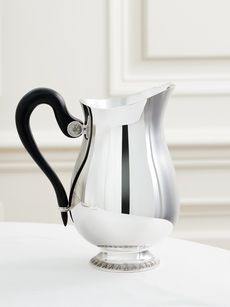 CHRISTOFLEMalmaison silver-plated pitcher
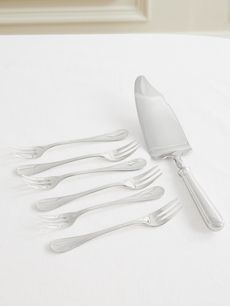 CHRISTOFLESeven-piece silver-plated cake server and dessert forks set
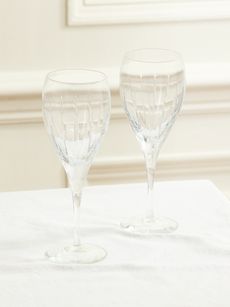 CHRISTOFLEIriana set of two crystal water glasses
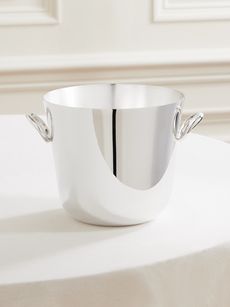 CHRISTOFLEVertigo silver-plated ice bucket
Ralph Lauren
Ralph Lauren has been making that same case since 1983, when he became the first clothing designer to create a complete home collection. Fashion designers entering interiors are now a dime a dozen, but Lauren’s original proposition was an adventure in complete lifestyle: clothes, furniture, linen, silver and leather goods. Early collections drew on the vision of a complete world rather than micro-trends, from New England and English craftsmanship to Jamaica and the American West. A tartan-covered highboy, a leather bed inspired by one of Lauren’s cars and a steel chair upholstered in tweed from a hacking jacket blurred the lines between fashion and interiors a long time before everyone hopped on the bandwagon.
As we look at the brand today, it’s the leather objects that especially espouse the timeless, heirloom-in-the-making philosophy. A woven-leather Preston hurricane lamp has the gorgeous tactility of a clothing accessory, while the leather-bound Brennan clock, made with Chelsea Clock, feels designed as though it could occupy a desk for decades. They are objects with enough character to survive the room around them reconfiguring.
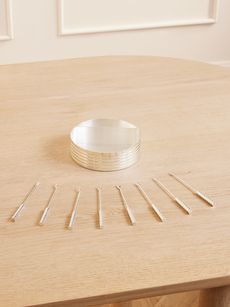 RALPH LAUREN HOMEMontgomery silver-plated olive bowl and pick forks
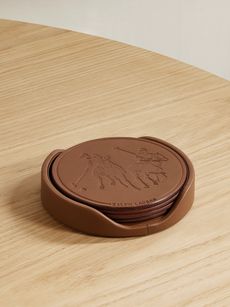 RALPH LAUREN HOMEGarrett set of four debossed leather coasters
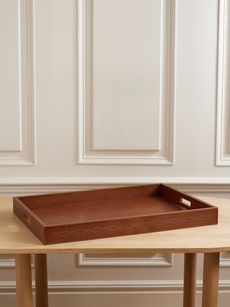 RALPH LAUREN HOMEBromley studded leather tray
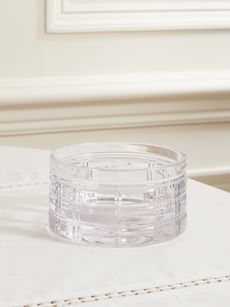 RALPH LAUREN HOMEHudson crystal bowl
That is probably the best distinction between an investment purchase and simply an expensive one. The new heirloom does not necessarily need a lofty provenance and it also doesn’t need to sit untouched awaiting a future owner. The opposite is true. Criado’s own non-negotiable is her sculptural Mucura Three. “It feels almost like a small sculpture rather than simply an object,” she says. “They become part of the atmosphere of your home and, over time, part of your own visual memory.”
If we pay close attention to the ethos of these homeware designers, the most luxurious thing you can buy now is something you cannot envisage eventually wanting to replace.